FROM THE LIBRARY:
Historic Elmwood: A Federal-Style Landmark at 16 N. Boylan Avenue
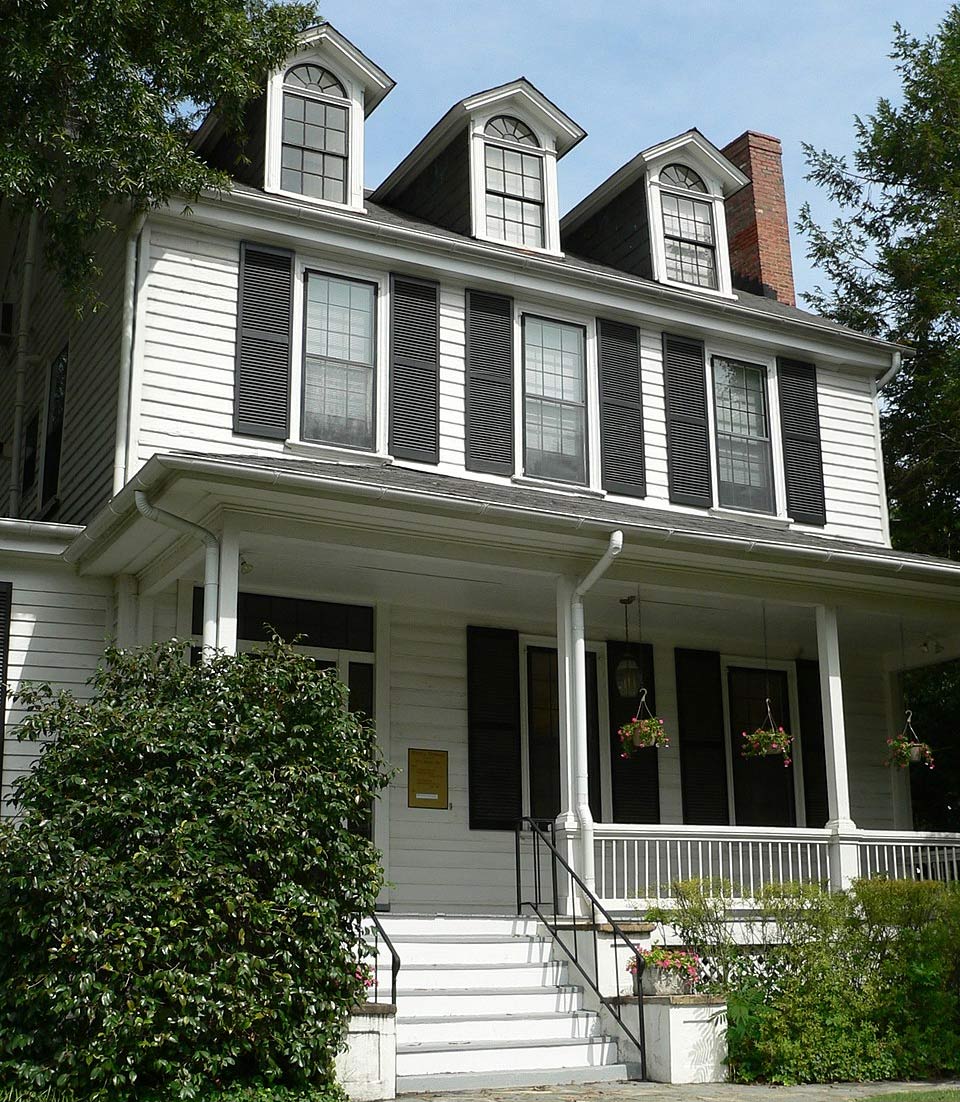
Set just off Hillsborough Street, Elmwood (16 N. Boylan Avenue) is one of Raleigh’s oldest surviving homes and a touchstone of North Carolina legal history. Built circa 1813 in the Federal style, the house was constructed for John Louis Taylor, the first Chief Justice of the North Carolina Supreme Court, who is known to have held law classes in the home.
Over the next century, Elmwood passed through the hands of several of the state’s most prominent figures. After Taylor’s death, ownership connected to William Gaston (associate justice) and the home was rented to Thomas Ruffin (chief justice). In 1837 it was purchased by Romulus M. Saunders, a legislator, congressman, and diplomat. Following the Civil War, Samuel A’Court Ashe, historian and editor, made Elmwood his residence for decades. Today, the property is used as professional offices—continuing a long tradition of law and public life under its roof.
Elmwood’s story also intersects directly with national events. During the Union occupation of Raleigh in April 1865, Major General Henry W. Slocum established his headquarters at Elmwood while Sherman’s forces moved through the Carolinas. That brief but consequential chapter is documented by the state’s Department of Natural and Cultural Resources.
Architecturally, Elmwood embodies early Raleigh: a frame dwelling with Federal proportions that later gained wings and a full-width front porch during nineteenth-century alterations. The house was designated a Raleigh Historic Landmark (1969) and listed on the National Register of Historic Places (1975)—formal recognition of its craftsmanship and civic importance.
A roadside Highway Historical Marker (H-54) on Hillsborough Street points visitors to the site and succinctly summarizes its distinguished residents, underscoring Elmwood’s long association with the state’s judiciary and public service.
Working in a House Shaped by the Law
For the attorneys of Blau | Hynson, practicing inside Elmwood is both a privilege and a responsibility. The house has sheltered generations of legal minds, witnessed monumental national change, and stood through eras of debate, progress, and reflection. While the Ashe family held the property for many years and Samuel A. Ashe remains a contested historical figure, Elmwood’s preservation allows an honest encounter with the full arc of North Carolina’s past. We are proud to do our work here—focused on criminal appeals and post-conviction support—in a place that reminds us daily that the law is part of a living history.
Sources: NC Highway Historical Marker Program; NC Department of Natural and Cultural Resources; Raleigh Historic Development Commission; National Register of Historic Places nomination.